Hantavirus in Aurora — What You Need to Know
Hantavirus Aurora residents should watch for is most closely linked to deer mice. They're common near open space, greenbelts, and newly developed land, and while they look similar to house mice, deer mice have a white belly and larger ears that set them apart.Hantavirus Aurora — How It SpreadsHantavirus spreads through contact with rodent droppings, urine, or nesting material — most often when dust from dried droppings gets disturbed and inhaled. Sweeping or vacuuming dry droppings is one of the most common ways this dust gets released into the air, which is exactly why the cleaning method matters as much as removal itself.
Safe Cleanup Steps
Deer mice droppings should never be swept or vacuumed dry. The safer approach starts with ventilating the room — open windows and let the space air out before you begin. Wear gloves, and clean the area with a damp cloth or disinfectant rather than a dry method. Avoid stirring up dust wherever possible.
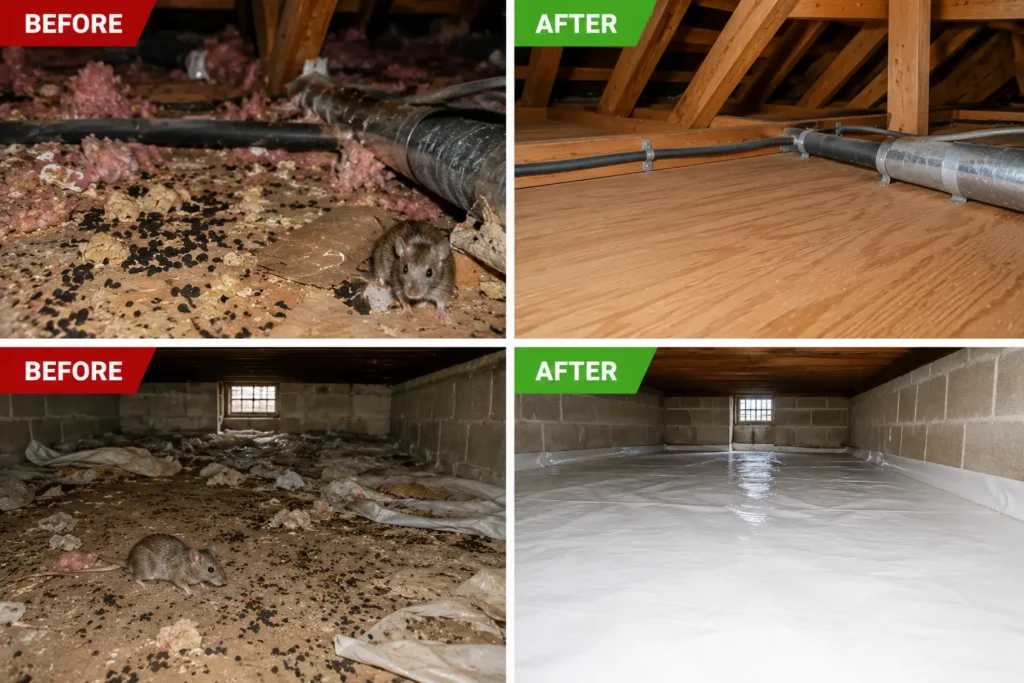
Attics, crawl spaces, sheds, and cabins that sit empty for stretches of time are the areas where deer mice activity is most likely, since these spots often go unchecked for long periods. If you’re planning to clean one of these spaces yourself, the CDC has detailed safety guidance on hantavirus prevention: https://www.cdc.gov/hantavirus/about/index.html
Why Species Identification Matters
House mice and deer mice look similar enough that it’s easy to assume droppings are from the more common house mouse. But the risk level and the cleaning method both depend on which species you’re actually dealing with. If you’re unsure, it’s worth having a professional confirm the species before cleanup begins, rather than assuming it’s low-risk.
When to Call a Professional
If you’re dealing with a larger amount of droppings, an enclosed space with poor ventilation, or you’re simply unsure what you’re looking at, professional cleanup is the safer route. We identify the species first, then handle cleanup using methods that keep dust and contamination contained.If you’re dealing with an active infestation, our attic cleanup service handles safe removal and cleanup from start to finish.